
Miso Salmon Ramen with Marinated Egg
Last reviewed on 4 October 2026
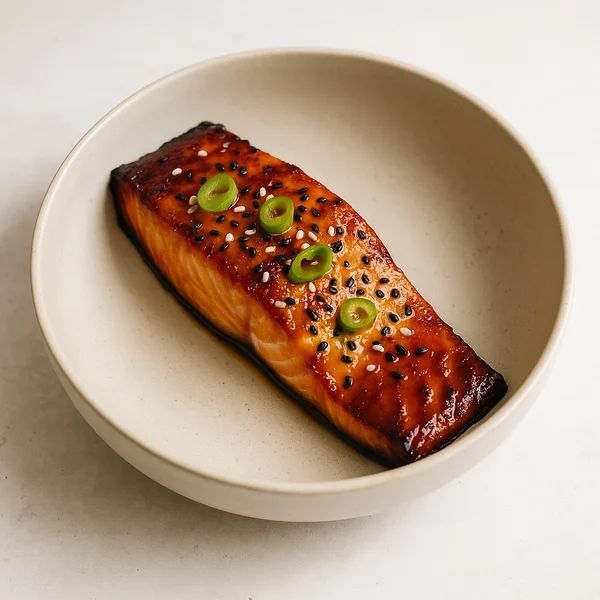
This is the weekend version of our easy salmon ramen: the salmon gets a sweet miso glaze under the grill, the broth is built on dashi and chicken stock with sautéed garlic, ginger and two kinds of miso, and the eggs are marinated in soy and mirin until the yolks are jammy and seasoned. None of it is difficult — it is mostly a question of doing things in the right order.
Plan ahead: the marinated eggs (ajitama) need at least 4 hours in the fridge, and are best made the day before.
Ingredients
- Marinated eggs: 2–4 large eggs, ¼ cup (60 ml) soy sauce, ¼ cup (60 ml) mirin, ¼ cup (60 ml) water
- Salmon: 2 salmon fillets (about 6 oz / 170 g each), skin on
- 1 tablespoon white miso, 1 teaspoon mirin and 1 teaspoon honey or sugar, mixed
- Broth: 1 tablespoon neutral oil and 1 teaspoon toasted sesame oil
- 2 garlic cloves and a 1-inch (2.5 cm) piece of ginger, finely grated
- 2 cups (480 ml) dashi (from instant dashi granules or homemade)
- 2 cups (480 ml) low-sodium chicken stock
- 2 tablespoons white miso and 1 tablespoon red miso (or 3 tablespoons awase/mixed miso)
- 1 tablespoon soy sauce, plus more to taste
- 1 tablespoon mirin
- 1 tablespoon tahini or Japanese sesame paste (optional, for a creamier broth)
- To serve: 2 portions fresh or dried ramen noodles
- 2 baby bok choy, halved
- ½ cup sweetcorn (frozen is fine), warmed in a little butter
- 2 green onions, sliced; nori sheets; toasted sesame seeds; chilli oil (optional)
Instructions
- Make the eggs (the day before, or at least 4 hours ahead): lower fridge-cold eggs into boiling water and cook for 6½ minutes for jammy yolks or 7 minutes for firmer ones. Chill in iced water, peel, then submerge in the soy sauce, mirin and water in a small bag or container. Refrigerate 4–24 hours.
- Heat the grill/broiler to high with the rack about 4 inches (10 cm) from the heat. Pat the salmon dry, put it skin-side down on a foil-lined tray and spread the miso-mirin-honey mixture over the top.
- Start the broth: heat the oils in a saucepan over medium heat and cook the garlic and ginger for 1 minute without browning. Add the dashi, chicken stock, soy sauce and mirin and bring to a gentle simmer.
- Grill the salmon for 6–9 minutes, depending on thickness, until the glaze is caramelised in spots and the centre reaches about 125–130°F (52–54°C). Watch it closely after 5 minutes: the sugar in the glaze can burn quickly.
- Meanwhile, put both misos (and the sesame paste, if using) in a bowl, whisk in a ladle of hot broth until smooth, then stir it back into the pan. Keep the broth hot but below a boil. Add the bok choy for 2 minutes.
- Cook the noodles in a separate pan of boiling water according to the packet and drain well.
- Divide the noodles between two warm deep bowls and ladle over the broth. Top with the salmon, bok choy, corn, halved marinated eggs, green onions, nori and sesame seeds, with chilli oil on the side.
Tips & variations
- Dashi: instant dashi granules (about 1 teaspoon per 2 cups water) are fine. For a fish-free broth use kombu dashi or all chicken stock.
- Teriyaki salmon ramen: glaze the salmon with teriyaki sauce instead of miso — see our teriyaki salmon.
- Spicy miso salmon ramen: add 1–2 teaspoons chilli bean paste (doubanjiang) or gochujang with the miso.
- Salmon roe: a spoonful of ikura on top adds a salty pop and makes the bowl look special.
- Reuse the egg marinade: it keeps in the fridge for a few days for a second batch of eggs; discard it after that.
Make-ahead plan
- Day before: make the marinated eggs.
- Up to 3 days ahead: make the broth up to the point before adding miso; refrigerate. Reheat and whisk in the miso just before serving.
- To serve: glaze and grill the salmon, cook the noodles and assemble — about 15 minutes.
New to miso? The miso salmon recipes page explains white, red and mixed miso.
Questions
Is salmon ramen Japanese?
Ramen is a Japanese noodle soup. Pork (chashu) and chicken are the traditional toppings, and salmon is a less common, more modern choice, but it pairs naturally with miso broth, the style associated with Sapporo in Hokkaido.
Should the salmon be cooked in the broth?
No. Cook it separately — grilled, seared or roasted — and place it on top. Simmering salmon in the broth makes it dry and can cloud the soup.
Why not boil the broth after adding miso?
Boiling miso dulls its aroma and can make the broth grainy. Whisk it in at the end and keep the broth just below a simmer.